IVF Treatment After Failed IUI: When to Take the Next Step
.webp)
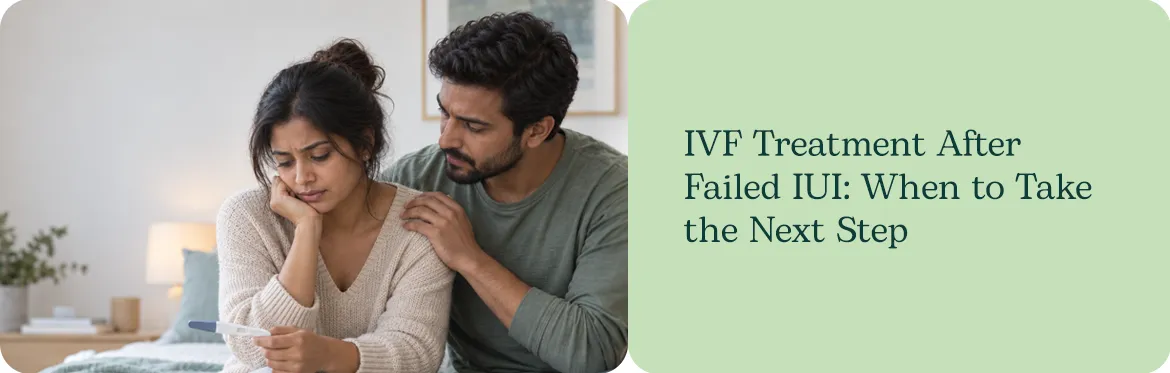
An unsuccessful IUI cycle can feel deeply disappointing. Many couples begin IUI with hope because it is often simpler, less invasive and closer to natural conception than IVF. So, when one cycle or even multiple cycles do not lead to pregnancy, it is natural to feel confused, frustrated or emotionally tired.
However, a failed IUI does not mean the journey is over. It also does not mean that nothing will work. It simply means that the doctors may need to review the treatment response, understand what may be limiting conception and decide whether moving to IVF treatment is the right step.
The decision to move from IUI to IVF should not be based on panic, pressure or guesswork. It should be based on age, ovarian reserve, sperm health, fallopian tube status, ovulation, medical history, previous IUI response and emotional readiness.
Understanding Why IUI May Not Work
IUI, or intrauterine insemination, involves placing prepared sperm directly inside the uterus around the time of ovulation. This can help sperm reach closer to the egg, but fertilisation still has to happen inside the body.
For IUI to work, several things must align. The woman should ovulate, at least one fallopian tube should be open, sperm should be healthy enough to reach and fertilise the egg, and the uterine environment should support implantation.
An IUI cycle may not lead to pregnancy because of:
- Age-related fertility decline
- Irregular or poor ovulation
- Low ovarian reserve
- Blocked or damaged fallopian tubes
- Endometriosis
- Poor sperm count, movement or shape
- Timing-related issues
- Poor egg or sperm quality
- Unexplained infertility
- Uterine factors such as polyps, fibroids or lining concerns
- Fertilisation or implantation issues that cannot be seen during IUI
This is why a failed IUI should be reviewed carefully. It may reveal that a more advanced and controlled treatment approach is needed.
When Should Couples Consider IVF After Failed IUI?
There is no single number of failed IUI cycles that applies to every couple. Some couples may be advised to try more than one IUI cycle, while others may be advised to move to IVF sooner. The decision depends on the couple’s full fertility picture.
A fertility specialist may advise IVF after failed IUI when:
- Multiple well-timed IUI cycles have not resulted in pregnancy
- The woman is above 35 and time is becoming important
- The woman is 38 or older and a faster treatment path may be more appropriate
- Ovarian reserve is low
- Sperm parameters are poor
- Fallopian tubes are blocked or damaged
- Endometriosis is present
- There has been repeated treatment delay without clarity
- Ovulation medicines and IUI have not worked
- There is unexplained infertility after proper evaluation
- The couple wants a more controlled approach to fertilisation and embryo development
Moving to IVF is not a failure. It is often a change in strategy.
How IVF Is Different from IUI
IUI supports conception inside the body by placing prepared sperm closer to the egg. IVF gives the fertility team more control over several stages of the process.
This difference is important. IVF can help doctors understand whether eggs fertilise, how embryos develop and whether embryo quality may be affecting pregnancy chances.
Tests to Do Before Moving from IUI to IVF
Before moving to IVF, the fertility specialist may review earlier reports and advise further tests. This helps avoid repeating the same uncertainty in another treatment cycle.
Important tests and evaluations may include:
- Ovarian reserve testing: AMH and antral follicle count can help estimate how the ovaries may respond to IVF medicines.
- Ultrasound scan: A scan can assess the ovaries, uterus, follicle count, fibroids, polyps or other visible concerns.
- Hormone tests: FSH, LH, estradiol, thyroid levels and prolactin may be checked depending on the patient’s history.
- Semen analysis: This is essential. Sperm count, motility and morphology can influence whether IVF or IVF with ICSI may be more suitable.
- Tubal evaluation: HSG, HyCoSy or laparoscopy may be discussed if fallopian tube status is unclear.
- Uterine cavity assessment: SIS, hysteroscopy or other tests may be advised if implantation-related concerns are suspected.
- Review of previous IUI cycles: The doctor may check whether ovulation was confirmed, how many follicles developed, sperm count after washing, timing of insemination and medication response.
- Medical health review: Diabetes, thyroid disorders, weight-related concerns, endometriosis, autoimmune issues or previous pregnancy loss may need attention.
- Genetic testing or counselling: This may be discussed in selected cases, especially with recurrent pregnancy loss, known genetic conditions or repeated IVF failure history.
The aim is not to do every test for every patient. The aim is to do the right tests for the right reason.
Why Patients Should Not Do Guesswork After Failed IUI
After an unsuccessful IUI, many couples begin searching online for answers. They may compare themselves with others, try home remedies, change supplements or delay consultation because they hope the next cycle will work.
Some online information may be useful, but guesswork can delay the right treatment. A patient may assume IUI failed because of poor timing, while the real concern may be sperm health. Another may think age is the only factor, while a uterine issue may also be present. Some couples continue IUI repeatedly without checking whether IVF would now be more suitable.
Patients should avoid guessing about:
- Whether ovulation is happening properly
- Whether the fallopian tubes are open
- Whether sperm health is strong enough for IUI
- Whether low AMH means no hope
- Whether IVF is required immediately
- Whether more IUI cycles will improve the chances
- Whether one failed cycle means treatment will never work
- Whether symptoms after IUI confirm pregnancy or failure
A fertility specialist can review the cycle with context and guide the next step with evidence, not assumptions.
When Are You Really Ready to Move to IVF?
Readiness for IVF is not only medical. It is also emotional, practical and financial. Couples should not feel forced into IVF before they understand why it is being recommended.
You may be ready to consider IVF when:
- Your doctor has explained why IUI may no longer be the best option
- You have completed key fertility tests
- Both partners have been evaluated
- You understand the IVF process and timeline
- You know whether ICSI may be needed
- You have discussed expected egg numbers and embryo development
- You understand that IVF improves control but does not guarantee pregnancy
- You are emotionally prepared for injections, scans and waiting periods
- You have discussed cost, leave planning and support at home
- You feel informed enough to consent without fear or pressure
Being ready does not mean being free from anxiety. Most couples feel nervous before IVF. Readiness means having enough clarity to move forward with confidence.
Myths to Be Aware of After Failed IUI
Myth 1: Failed IUI means IVF will also fail
This is not true. IUI and IVF work differently. IVF allows fertilisation to happen in the laboratory and gives the fertility team more information about egg, sperm and embryo development.
Myth 2: More IUI cycles are always better
Some couples may benefit from more than one IUI cycle. However, continuing IUI indefinitely without reassessment can delay better treatment. Age, ovarian reserve and diagnosis should guide the decision.
Myth 3: IVF is only for severe infertility
IVF may be used for many reasons, including blocked tubes, male infertility, endometriosis, low ovarian reserve, repeated failed IUI or unexplained infertility.
Myth 4: IVF guarantees pregnancy
IVF can improve treatment control, but pregnancy still depends on age, egg quality, sperm quality, embryo development, uterine health and implantation.
Myth 5: If IUI failed, the woman is responsible
Infertility is a couple’s journey. Male fertility, ovulation, tubes, uterus, egg quality and sperm quality all matter. Blame has no place in fertility care.
Myth 6: IVF is too emotionally difficult to consider
IVF can be emotionally demanding, but good counselling, clear communication and step-by-step guidance can make the process more manageable.
Emotional Stress After Failed IUI
A failed IUI cycle can affect both partners deeply. The two-week wait can be stressful, and a negative result can bring grief, anger, guilt or numbness. Some couples feel tired of repeated hope and disappointment.
Women may wonder if their body is failing them. Men may feel helpless or responsible if semen parameters are involved. Couples may also feel pressure from family, finances, age or social expectations.
Emotional stress may show up as:
- Anxiety before pregnancy testing
- Fear of starting another treatment
- Irritability or emotional withdrawal
- Sleep disturbance
- Difficulty discussing the next step
- Pressure to “stay positive”
- Resentment when others conceive easily
- Fear that time is running out
- Worry about IVF cost and outcome
These feelings are valid. A failed IUI is not only a medical result. It is an emotional experience. Patients should not be expected to simply move on without support.
How to Cope Before Taking the Next Step
Couples can take a calmer approach by giving themselves time to process the result and then scheduling a review consultation.
Helpful steps include:
- Ask the doctor what the IUI cycle revealed
- Review ovulation, sperm preparation and timing
- Discuss whether more IUI cycles make sense
- Ask whether IVF or IVF with ICSI may be more suitable
- Understand the expected IVF timeline
- Write down medical and emotional questions
- Decide how much information to share with family
- Speak openly with your partner about fears and expectations
- Consider counselling if the stress feels heavy
- Avoid making decisions immediately after emotional disappointment
The goal is to move forward with clarity, not urgency created by panic.
Where to Get IVF Treatment After Failed IUI
Choosing where to get IVF treatment after a failed IUI is an important decision. The right fertility centre should not simply move the patient from one treatment to another. It should review why IUI may not have worked and then create a personalised plan.
Couples should look for an IVF centre that offers:
- Complete fertility evaluation for both partners
- Careful review of previous IUI cycles
- Ovarian reserve testing and ultrasound monitoring
- Semen analysis and male fertility assessment
- Tubal and uterine evaluation where needed
- IVF and ICSI options
- Advanced embryology lab support
- Clear counselling about risks, success rates and expectations
- Emotional support during treatment
- Transparent communication at every stage
The best IVF treatment is not the most advertised treatment. It is the treatment planned after understanding the couple’s full medical picture.
How Oval Fertility Supports the Next Step
At Oval Fertility, the IVF journey is built around personalised evaluation, guided care and advanced reproductive science. The process may include consultation, ovarian stimulation, egg retrieval, fertilisation in a specialised embryology lab, embryo culture and selection, embryo transfer, pregnancy testing and monitoring.
For couples moving from failed IUI to IVF, this kind of structured approach can be reassuring. The fertility team can review previous treatment, assess ovarian reserve, evaluate sperm health, consider whether ICSI is needed and guide patients through the next step with clarity.
IVF after a failed IUI is not just about changing treatment. It is about understanding what has happened so far and choosing a more suitable path forward.
Key Takeaways
- A failed IUI does not mean the fertility journey is over.
- IUI and IVF work differently, so IVF may still help after unsuccessful IUI cycles.
- The decision to move to IVF should depend on age, ovarian reserve, sperm health, tube status, diagnosis and previous treatment response.
- Couples should avoid repeated guesswork after a failed IUI.
- Semen analysis, ovarian reserve testing, ultrasound and tubal or uterine evaluation may be important before IVF.
- IVF may be considered sooner when age, low ovarian reserve, blocked tubes or male-factor infertility are present.
- A personalised IVF plan from a trusted IVF treatment centre for couples can help them move forward with more confidence.
It starts with a question. Our fertility experts
take it from there.
